
Business
BacktoFrontShow Pricing: A Detailed Look at Plans, Costs, Features, and Available Options


If you are researching backtofrontshow pricing, the most important information is straightforward: the current BacktoFrontShow website publicly lists a Basic plan at $1,200 per month, a Pro plan at $3,600 per month, and an Enterprise plan with custom pricing.
BacktoFrontShow currently positions itself as a podcast analytics platform rather than a basic podcast hosting or recording service. Its stated focus includes listener demographics, audience behavior, engagement, device usage, geographical analytics, and reporting.
Quick Answer: How Much Does BacktoFrontShow Cost?
The current public BacktoFrontShow pricing is:
| Plan | Published Price | Main Positioning |
|---|---|---|
| Basic | $1,200/month | Core podcast analytics |
| Pro | $3,600/month | Advanced analytics and integrations |
| Enterprise | Contact for pricing | Custom enterprise features |
These are the prices displayed on BacktoFrontShow’s current public pricing page. The site does not publicly state that these monthly prices include a specific annual contract, annual discount, implementation fee, or other commercial terms, so those details should be confirmed directly before purchasing.
What Is BacktoFrontShow?
BacktoFrontShow describes itself as a podcast analytics platform designed to help podcasters and media teams understand listener behavior. The website highlights audience demographics, listening behavior, engagement, device analytics, custom reporting, and geographical analysis.
The platform is intended to provide more than basic download numbers. Its stated workflow involves connecting a podcast, collecting listener data, accessing an analytics dashboard, and generating customized reports.
An important name clarification
There is another reason searches for BacktoFrontShow can be confusing.
“The Back to Front Show” was also the name of a web-industry podcast hosted by Keir Whitaker and Kieran Masterton, covering web development, design, technology, and startups. Historical podcast listings show the program as a separate podcast identity.
Therefore, if you are researching backtofrontshow pricing because you remember the older podcast, make sure you are looking at the current backtofrontshow.com product rather than historical references to the podcast.
BacktoFrontShow Pricing at a Glance
Basic Plan — $1,200 per Month
The Basic Plan is the lowest publicly listed BacktoFrontShow subscription. It costs $1,200 per month.
The published Basic features include:
- Listener demographic analysis
- Playback-location analysis
- User engagement monitoring
- Likes, shares, and comments tracking
- 24/7 customer support
- Data security features
The homepage also describes Basic-level capabilities around episode performance, listening trends, customizable reporting, and feedback or interaction analysis.
At $1,200 per month, this is clearly positioned above the price range of many entry-level podcast tools. It makes the most sense to evaluate the plan based on the business value of its audience data rather than simply comparing subscription prices.
Pro Plan — $3,600 per Month
The Pro Plan costs $3,600 per month, making it three times the published price of Basic.
The Pro tier adds more advanced analytics and integration capabilities, including:
- Listening behavior tracking
- Episode popularity analysis
- Average listening-time tracking
- Multi-platform device analytics
- AI-driven sentiment analysis
- Feedback aggregation
- Real-time data updates
- API integration
- 24/7 customer support
- Data security features
The Pro plan is potentially more relevant to podcast networks, agencies, media teams, and organizations that need deeper audience intelligence or want to connect analytics with other systems.
Enterprise Plan — Custom Pricing
BacktoFrontShow does not publicly display a fixed Enterprise price. Instead, the pricing page tells prospective customers to contact the company.
Enterprise includes the Pro-level capabilities plus features such as:
- Geographical analytics
- Custom reports
- API integration
- Premium templates
- Priority feature requests
- Dedicated account management
- White-labeling
- Advanced user training
- Monthly analytics webinars
- Custom onboarding
Because Enterprise pricing is customized, the final cost may depend on the organization’s requirements and the services included in its agreement. The exact commercial terms should therefore be requested in writing.
BacktoFrontShow Pricing Comparison
| Feature | Basic | Pro | Enterprise |
|---|---|---|---|
| Monthly price | $1,200 | $3,600 | Custom |
| Listener demographics | ✓ | ✓ | ✓ |
| Playback/location insights | ✓ | ✓ | ✓ |
| Engagement monitoring | ✓ | ✓ | ✓ |
| Listening behavior | — | ✓ | ✓ |
| Device analytics | — | ✓ | ✓ |
| Sentiment analysis | — | ✓ | ✓ |
| Real-time updates | — | ✓ | ✓ |
| API integration | — | ✓ | ✓ |
| Geographical analytics | — | — | ✓ |
| Custom reports | — | — | ✓ |
| Dedicated account manager | — | — | ✓ |
| White-labeling | — | — | ✓ |
| Custom onboarding | — | — | ✓ |
The table reflects capabilities explicitly shown on the current public pricing page. A dash means the capability is not listed for that tier; it should not automatically be interpreted as confirmation that the feature is technically unavailable.
How Much Does BacktoFrontShow Cost Per Year?
If you simply multiply the published monthly prices by 12, the basic arithmetic is:
- Basic: $1,200 × 12 = $14,400 per year
- Pro: $3,600 × 12 = $43,200 per year
- Enterprise: Custom
These figures are calculated annual equivalents, not advertised annual subscription prices. The public pricing page does not clearly publish an annual billing discount, so prospective customers should ask whether annual contracts receive different pricing.
Does BacktoFrontShow Have a Free Plan?
The current public pricing page does not list a free subscription plan. It displays Basic, Pro, and Enterprise, while the website also includes calls to request access or start a free trial.
That distinction matters: a free trial is not the same thing as a permanently free plan.
If a trial is important to your purchasing decision, confirm its duration, feature limitations, payment requirements, and cancellation terms before signing up.
Which BacktoFrontShow Plan Is Right for You?
The right plan depends less on the number of podcast episodes you publish and more on how important advanced audience intelligence is to your operation.
Basic may be suitable if:
- You need audience demographic information.
- You want engagement insights.
- You need location-based listener information.
- You want centralized podcast analytics.
- You do not require advanced integrations.
Pro may be suitable if:
- You need detailed listening-behavior analysis.
- Device-level insights matter to your strategy.
- You want sentiment analysis.
- You need real-time data.
- API integration is important.
- Your team relies heavily on audience data.
Enterprise may be suitable if:
- You operate a larger media organization.
- You need custom reporting.
- You want white-label functionality.
- You need dedicated account support.
- Your organization requires custom onboarding or feature development.
What Should You Check Before Paying?
A monthly price alone does not tell you whether a podcast analytics platform is a good investment.
Before choosing a BacktoFrontShow plan, ask about:
- Contract length: Is the subscription month-to-month or annual?
- Trial terms: Is there a free trial, and what happens when it ends?
- Data limits: Are there listener, episode, account, or usage limits?
- Implementation: Are setup or onboarding services included?
- Integrations: Which external platforms can the API connect to?
- Reporting: Which reports are included at each level?
- Data ownership: Understand how your podcast data is handled and exported.
- Cancellation: Ask about notice periods and renewal terms.
- Enterprise pricing: Request a written quote that clearly lists included services.
These questions are particularly important because the publicly displayed prices are substantial. A buyer should understand the complete commercial arrangement rather than evaluating the product solely from its headline monthly figure.
Is BacktoFrontShow Worth the Price?
There is no universal answer.
For a small independent podcast that primarily needs basic download statistics, $1,200 per month may be difficult to justify. For a larger media company or podcast network where audience intelligence directly supports content strategy, advertising, audience growth, or reporting, advanced analytics could have considerably more value.
The sensible approach is to compare the subscription cost with measurable outcomes. For example, if better audience segmentation helps improve advertising performance or content decisions, the platform may justify a higher software budget. If the additional data is rarely used, a premium plan may provide little practical benefit.
In other words, the best question is not simply “How much is BacktoFrontShow?” but “What business value will the analytics create for my podcast operation?”
Final Takeaway on BacktoFrontShow Pricing
The current public BacktoFrontShow pricing starts at $1,200 per month for Basic, rises to $3,600 per month for Pro, and uses custom pricing for Enterprise.
The major difference between the tiers is the depth of analytics, integrations, reporting, and enterprise support. Basic focuses on core audience and engagement information, while Pro adds more advanced behavioral, device, sentiment, real-time, and API capabilities. Enterprise adds customization, dedicated support, white-labeling, and other higher-level services.
Because pricing and product offerings can change, verify the current figures and contractual terms on the official BacktoFrontShow website before making a purchase.
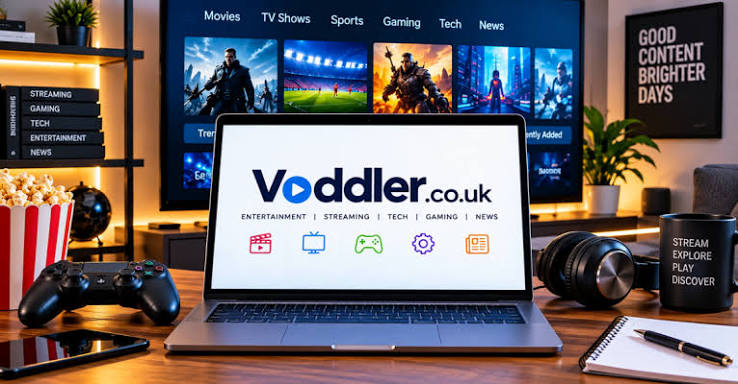
Voddler.co.uk is a website associated with entertainment, technology, and online streaming topics. However, the name can cause confusion because Voddler was also the name of a Swedish video-on-demand company that operated during the early years of internet movie streaming. Understanding the difference helps visitors determine what the current website offers and whether it meets their needs.
This guide explores Voddler.co.uk, its content, the history of the original Voddler service, and the practical steps users can take to evaluate an unfamiliar website before trusting it.
Quick Answer: What Is Voddler.co.uk?
Voddler.co.uk currently functions mainly as an informational website covering entertainment and technology, including movies, gaming, apps, sports, anime, and streaming-related topics. It should not automatically be confused with the original Swedish Voddler streaming company, which went bankrupt in 2018. Visitors should verify current features and assess external links independently before sharing personal information.
What Is Voddler.co.uk?
Voddler.co.uk is an online publication with articles covering digital entertainment, technology, software, and related subjects. Its website navigation includes categories such as Apps, Gaming, Movies, Sports, Anime, and Blog.
These categories suggest that the site is intended for readers interested in digital trends and entertainment information. Depending on the article, visitors may find explanations of online services, discussions of streaming platforms, technology guides, or information about entertainment-related websites.
An important distinction is that a website discussing streaming does not necessarily provide movies or television programmes for direct playback. During research, the current website appeared primarily editorial rather than like a conventional subscription service with a searchable movie catalogue.
This means readers should examine individual pages to understand whether they are reading an informational guide or accessing a separate entertainment service.
What Features and Content Can Visitors Expect?
The current website covers several broad subject areas.
Movies and streaming: Articles discuss online entertainment and streaming-related services. Readers can use this information to learn about platforms and compare available options, although claims about third-party services may need independent verification.
Gaming: Gaming-related material can help readers explore digital entertainment, gaming trends, and related technology.
Apps and software: This category covers applications and digital tools. Before installing software mentioned in any article, users should check its official source, permissions, reputation, and security.
Sports and anime: These topics appeal to readers looking for information about sports entertainment, anime, and related online platforms.
General technology: Broader articles may address software, internet services, and developments in digital media.
The exact selection of articles can change over time. Consequently, it is better to evaluate the website based on its current pages instead of assuming that every feature mentioned in an older article remains available.
Is Voddler.co.uk the Same as the Original Voddler?
No confirmed evidence establishes that the current Voddler.co.uk website is a continuation of the original Swedish streaming business.
The original Voddler was a video-on-demand company that developed an online service for watching films. The current UK website, by contrast, primarily publishes informational content. Sharing a name does not establish that two websites have the same ownership, management, technology, or business operations.
This distinction is especially important when searching for older information about Voddler. Historical articles may discuss its movie library, applications, payment options, or proprietary streaming technology. Those details describe the former service and should not automatically be attributed to the present website.
Readers researching Voddler should therefore distinguish between the historical company and the current domain.
What Happened to the Original Voddler Streaming Service?
The original Voddler emerged in Sweden during the early development of online video-on-demand services. Its consumer streaming platform launched in 2009, offering a way to watch digital entertainment over the internet.
The company experimented with different business models, including advertising-supported viewing, rentals, subscriptions, and digital purchases. It also developed Vnet, a peer-assisted video distribution technology designed to help deliver video content across participating devices.
Voddler operated in a challenging industry. Streaming businesses need content licences, dependable technology, sufficient customers, and revenue that covers licensing and operating expenses. Competition and the cost of maintaining a streaming service can make long-term profitability difficult.
The original Voddler Group eventually went bankrupt in January 2018. This historical development explains why current references to Voddler need careful interpretation.
The former company’s technology and business history remain relevant to streaming history, but they do not prove that the present Voddler.co.uk domain operates the same service.
Is Voddler.co.uk Safe and Legitimate?
The safest answer is that users should evaluate the current website carefully rather than treating its safety or legitimacy as definitively established.
The site is accessible and publishes public articles, but accessibility alone does not verify its ownership, editorial accuracy, or the safety of every external website it mentions. A third-party trust score can offer an additional signal, but automated ratings are not conclusive proof that a website is fraudulent or trustworthy.
Before relying on Voddler.co.uk, consider these checks:
- Review the About and Contact pages. Look for identifiable information about the publisher and a clear way to contact the organisation.
- Read the privacy policy. Check what information may be collected, how cookies are used, and whether data may be shared with third parties.
- Check external links. Make sure a linked service is the genuine website you intended to visit.
- Avoid unexpected downloads. Do not install unknown applications, browser extensions, video players, or files simply because a page recommends them.
- Protect payment information. Do not provide card details or sensitive personal information unless the service’s identity, terms, and payment arrangements have been independently verified.
- Look for independent evidence. Search for credible reviews, company records, and consistent information from sources unrelated to the website.
HTTPS encryption is useful because it protects information in transit, but it does not guarantee that a website is honest or that its content is safe.
For ordinary reading, basic browser precautions are sensible. Greater caution is warranted when a page directs visitors to unfamiliar streaming services, downloads, or registration forms.
Is Voddler.co.uk Free to Use?
Public informational articles appear to be accessible without a paid membership, and research did not identify a clear current subscription plan for a Voddler-owned movie-streaming catalogue.
However, readers should distinguish free access to articles from free access to entertainment. If an article recommends an external streaming platform, that service may have its own subscription fees, advertising, account requirements, or payment conditions.
Always check the terms on the actual service before signing up. Do not rely on historical prices or subscription details from the original Voddler company as evidence of current pricing.
Benefits and Limitations of Voddler.co.uk
The usefulness of Voddler.co.uk depends on what a visitor expects from the website.
Potential Benefits
- Free informational content: Visitors can read public articles without necessarily purchasing a membership.
- Multiple subject categories: Entertainment, gaming, apps, sports, anime, and technology provide several areas to explore.
- General research: Articles may introduce readers to online services and digital entertainment topics.
- Convenient browsing: A publication-style structure can help users find information without installing an application.
Limitations to Consider
- Possible confusion about its identity: The name is associated with a former streaming company, which can create unrealistic expectations.
- No clearly established current movie catalogue: The website should not be assumed to offer direct, licensed movie playback.
- Limited independent verification: Readers should establish who operates the site before relying on important claims.
- Changing third-party services: Streaming websites and applications can change ownership, availability, security, and licensing status.
- Potentially outdated articles: Older guides may describe services that no longer work as originally presented.
These considerations do not automatically make the website unsafe. They simply indicate why readers should separate useful information from claims that require additional evidence.
How to Use Voddler.co.uk More Safely
If you decide to browse the website, follow a few straightforward precautions.
Step 1: Start with the official domain. Check the address carefully before opening it. Similar-looking domains may belong to different operators.
Step 2: Identify the purpose of the page. Determine whether it provides an informational article, recommends another platform, or claims to offer direct access to entertainment.
Step 3: Verify important claims. Check pricing, company details, service availability, and licensing through independent or official sources.
Step 4: Be cautious with links and downloads. Avoid unexpected pop-ups, unfamiliar executable files, and requests to disable browser security features.
Step 5: Protect your accounts. Do not reuse passwords or provide sensitive information to a website whose identity you have not verified.
Step 6: Choose authorised entertainment services. If your goal is to watch a film or television programme, use a provider that has the appropriate distribution rights in your region.
These practices are useful for unfamiliar entertainment websites generally, not just Voddler.co.uk.
What Are the Alternatives to Voddler.co.uk for Watching Movies?
If you want to watch films rather than read entertainment articles, consider established streaming providers that officially serve your location.
Examples include Netflix, Prime Video, Disney+, and other authorised regional services. Availability, pricing, catalogue selection, and supported devices vary by country and may change over time.
You can also check official broadcaster applications, legitimate free ad-supported services, and public library streaming options where available.
When comparing services, consider the following factors:
| Factor | What to check |
|---|---|
| Content catalogue | Are the films or programmes you want available? |
| Licensing | Is the provider authorised to distribute the content in your country? |
| Price | Is the service free, subscription-based, or pay-per-view? |
| Device support | Does it work on your phone, computer, or television? |
| Privacy | Is the provider clear about data collection and account security? |
| Reliability | Does it provide stable playback and accessible customer support? |
Choose a service based on your viewing needs and verified availability, not simply on a claim that it offers everything for free.
Final Verdict: Is Voddler.co.uk Worth Visiting?
Voddler.co.uk is best approached as an informational website about entertainment and technology rather than assumed to be the original Voddler movie-streaming platform. Its articles may help readers explore digital topics, but the value of individual pages depends on their accuracy, freshness, and supporting evidence.
The most important consideration is the distinction between reading about a streaming service and using that service. Verify external platforms independently, review privacy information, and avoid sharing sensitive details with unfamiliar websites.
For people seeking movies and television programmes, a licensed streaming provider offers a clearer way to confirm content availability and viewing rights. For people researching online entertainment, Voddler.co.uk may be a starting point, provided its information is checked where necessary.
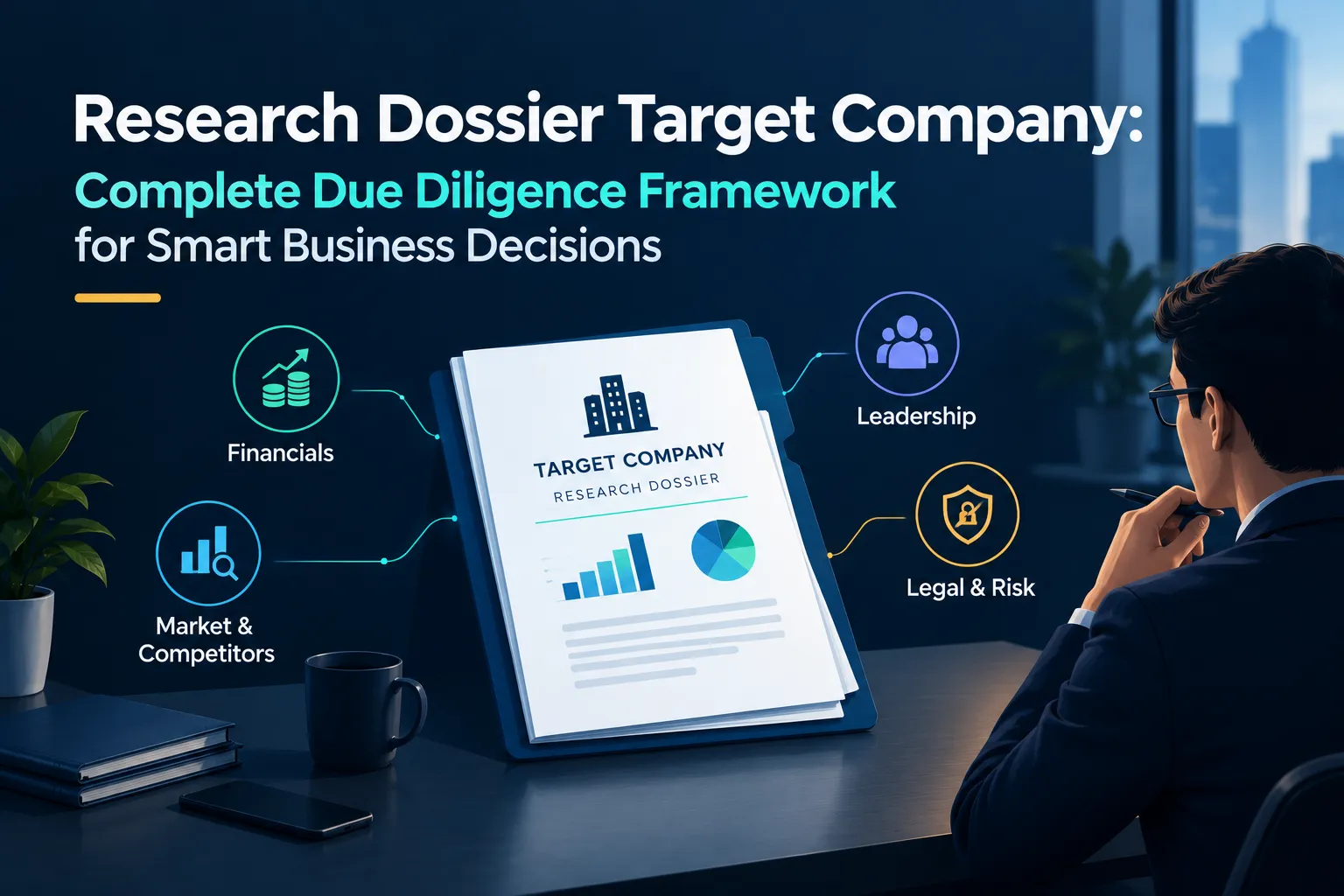
Researching a business properly requires more than reading its website and checking a few search results. A research dossier for a target company organizes important facts, evidence, financial information, leadership details, competitors, risks, and market information into one structured document.
This approach is useful when evaluating a potential investment, acquisition, supplier, business partner, client, competitor, or employer. The goal is not simply to collect information. It is to create a reliable picture of the company and identify questions that deserve further investigation.
What Is a Research Dossier for a Target Company?
A research dossier for a target company is a structured report containing verified information and analysis about a specific business. It can cover the company’s identity, ownership, management, products, business model, finances, market position, competitors, legal issues, reputation, risks, and opportunities.
The depth of the dossier should depend on the importance of the decision being considered. A basic sales prospect may require a short company profile, while an acquisition or investment may require much deeper research.
Why Is a Company Research Dossier Important?
Company information is usually scattered across many different sources. A corporate website may explain products and services, while government registries contain legal information and financial filings provide additional evidence.
A dossier brings these pieces together.
It can help researchers:
- Understand how a company makes money
- Verify important corporate information
- Identify competitors
- Examine financial performance
- Research leadership and ownership
- Detect potential risks
- Understand market positioning
- Prepare for negotiations or meetings
- Keep research evidence organized
The biggest advantage is context. A revenue figure, for example, means little without knowing its reporting period, source, business segment, and surrounding financial trends.
What Should a Research Dossier Include?
There is no single format that works for every company. However, a useful target company research dossier normally contains several important sections.
Company Identity and Background
Begin with basic information that establishes exactly which business is being researched.
Record details such as:
- Legal company name
- Trading or brand name
- Official website
- Registration number
- Headquarters
- Date of incorporation
- Industry
- Geographic markets
- Parent company
- Subsidiaries
- Current company status
This step helps prevent one of the most common research errors: confusing businesses with similar names.
For UK businesses, Companies House provides public company information, including registration details, officers, filing history, and other corporate records.
Company History and Ownership
Next, build a short company timeline.
Research:
- Founding date
- Original founders
- Major acquisitions
- Mergers
- Name changes
- Expansion into new markets
- Major product launches
- Leadership changes
- Ownership changes
Ownership is especially important when researching a business for a potential transaction.
Determine whether the company is independently owned, controlled by a parent organization, backed by investors, or connected to other businesses.
Whenever possible, compare company claims with independent corporate records.
Leadership and Management
The people running a company can provide important context about its strategy and development.
A research dossier can document:
- CEO
- CFO
- COO
- Directors
- Senior executives
- Previous leadership roles
- Executive tenure
- Significant ownership interests
- Recent management changes
For public companies, regulatory filings can provide useful information about directors, executives, ownership, and significant corporate events.
In the United States, SEC EDGAR provides access to company filings and allows researchers to search for filings by company name, ticker symbol, or other identifiers.
Products, Services, and Business Model
Understanding what a company sells is only the first part of business research.
You should also determine:
Who are its customers?
What exactly do customers purchase?
How does the company generate revenue?
Which products or services appear most important?
Does the company rely heavily on one market or customer group?
Study pricing, distribution channels, subscriptions, licensing, physical locations, recurring revenue, and other relevant revenue mechanisms.
The objective is to understand how the business actually operates rather than simply repeating its marketing language.
Financial Performance
Financial analysis can be one of the most important parts of a company research dossier, especially when the research involves investment, acquisition, lending, or partnership decisions.
Depending on the company and available information, examine:
- Revenue
- Gross profit
- Operating income
- Net income
- Cash flow
- Assets
- Liabilities
- Debt
- Capital expenditure
- Revenue growth
- Profit margins
Always record the reporting period and source alongside financial figures.
For U.S. public companies, SEC EDGAR is a primary source for filings such as annual and quarterly reports.
Private companies may disclose considerably less financial information. In those cases, clearly distinguish between confirmed figures, company claims, third-party estimates, and information that could not be verified.
Market and Competitor Analysis
A target company should not be analyzed in isolation.
Research its:
- Direct competitors
- Indirect competitors
- Customer segments
- Geographic markets
- Industry trends
- Product substitutes
- Competitive advantages
- Barriers to entry
Simply listing competitors is not enough.
A useful analysis should explain why each competitor matters. Two businesses might sell similar products but compete in very different ways because one targets budget customers while the other focuses on enterprise clients.
Understanding these differences provides a clearer picture of the target company’s position.
Legal and Regulatory Research
The legal section should be adjusted according to the purpose of the research.
Potential areas include:
- Corporate registration
- Litigation
- Regulatory actions
- Licenses
- Intellectual property
- Material contracts
- Employment issues
- Environmental obligations
- Data protection
- Industry-specific regulations
A public-information research dossier should not automatically be described as professional legal due diligence.
For a major acquisition, investment, or other significant transaction, specialist lawyers, accountants, tax professionals, and other experts may need to examine primary documents.
Reputation and Customer Evidence
A business can look strong on paper while having customer or reputation problems that deserve attention.
Research:
- Customer reviews
- Recurring complaints
- Media coverage
- Industry discussions
- Product feedback
- Customer disputes
- Company responses to criticism
Reviews and social media should be interpreted carefully. A single complaint does not automatically demonstrate a company-wide problem.
Look for patterns and corroborating evidence before drawing conclusions.
How to Create a Research Dossier Step by Step
Creating a company research dossier becomes easier when the work follows a consistent process.
Step 1: Define the Research Objective
First, determine why you are researching the company.
For example:
Assess the company’s business model, competitive position, financial condition, and major risks before entering a partnership.
A clear objective prevents irrelevant information from filling the dossier.
Step 2: Establish the Company’s Identity
Confirm the legal name, official website, registration details, location, industry, and corporate structure.
Make sure all later research relates to the correct company.
Step 3: Collect Primary Sources
Start with official sources whenever possible.
These may include:
- Company websites
- Annual reports
- Investor relations pages
- Regulatory filings
- Government registries
- Official announcements
- Corporate documents
Primary sources should form the foundation of the dossier.
Step 4: Add Independent Sources
After collecting company-provided information, compare it with independent sources.
Useful sources may include reputable news organizations, industry publications, research organizations, regulatory databases, and academic material.
This helps identify differences between corporate claims and independently available evidence.
Step 5: Verify Important Claims
For every significant claim, record:
Claim → Source → Date → Verification Status
This simple system makes the research easier to audit later.
Step 6: Analyze the Evidence
Do not simply collect information.
Ask what the evidence means.
For example, if revenue has declined, investigate why. The cause could be reduced demand, currency changes, restructuring, an asset sale, or another factor.
A number without context can easily be misunderstood.
Step 7: Record Unknown Information
A strong dossier should clearly identify information that could not be confirmed.
An unknown is better than an unsupported assumption.
It also creates a useful list of questions for future research.
How Do You Verify Company Information?
The best approach is to compare important information across multiple reliable sources.
For example, a company website may list current executives, while a corporate registry or regulatory filing may provide additional confirmation.
For UK company research, Companies House provides access to public company records. Its services allow users to research company information and filing records.
For U.S. public companies, SEC EDGAR provides access to millions of filings.
Government and regulatory databases are particularly useful because they can provide primary records. However, researchers should still understand what a database does and does not verify.
Research Dossier vs. Company Profile vs. Due Diligence
These terms are related but have different purposes.
| Document | Main purpose |
|---|---|
| Company profile | Provides a basic overview of a business |
| Research dossier | Collects evidence, analysis, context, and risks |
| Competitor analysis | Examines businesses competing within a market |
| Due diligence | Conducts a detailed investigation for an important decision or transaction |
A research dossier can support due diligence, but it should not automatically be treated as a replacement for formal professional due diligence.
Common Mistakes to Avoid
Several mistakes can reduce the quality of company research.
Using Outdated Information
Leadership, ownership, financial performance, and corporate structures can change. Always record dates.
Treating Marketing Claims as Facts
A company’s website is useful, but promotional statements should not automatically be treated as independently verified facts.
Depending on One Source
Important information should be checked against additional reliable sources whenever possible.
Confusing Similar Companies
Always confirm the company’s legal identity before adding information to the dossier.
Presenting Estimates as Facts
Clearly label estimates, opinions, projections, and unverified claims.
Ignoring Contradictory Information
If credible sources disagree, record the disagreement instead of silently selecting the information that fits your preferred conclusion.
Failing to Record Sources
Every important fact should have enough source information to allow another researcher to verify it.
Simple Research Dossier Template
A reusable target company dossier can follow this structure:
1. Research Objective
Purpose, scope, and key questions.
2. Company Overview
Legal identity, location, industry, website, and history.
3. Ownership and Leadership
Shareholders, parent companies, directors, and executives.
4. Business Model
Products, services, customers, and revenue sources.
5. Financial Analysis
Revenue, profitability, assets, liabilities, debt, and cash flow.
6. Market Analysis
Industry, customers, trends, and geographic markets.
7. Competitor Analysis
Direct and indirect competitors.
8. Legal and Regulatory Review
Registrations, litigation, licenses, and relevant regulations.
9. Reputation
Customer reviews, media coverage, and public feedback.
10. Risk and Opportunity Assessment
Financial, operational, market, legal, technological, and reputational considerations.
11. Evidence Log
Sources, dates, claims, and verification status.
12. Open Questions
Information that requires additional research.
Final Thoughts
A research dossier for a target company turns scattered business information into a structured research resource.
The most effective approach is to begin with a clear research objective, verify the company’s identity, prioritize primary sources, compare important claims with independent evidence, analyze the business in its market context, and document both confirmed information and unknowns.
A strong dossier does not need to be extremely long. Its value comes from the quality of the evidence, clarity of the analysis, and usefulness of the questions it helps answer.
The ultimate goal is simple: create a reliable, organized picture of the target company that allows important business questions to be investigated more efficiently.
If you have searched for fundfireinsight.com, you may be trying to understand what the website is, what it publishes, and whether its financial content can be trusted for important decisions. The answer requires some caution because several websites currently use very similar FundFireInsight names and domains.
Current search results show that websites associated with the name discuss finance, investing, business, market analysis, and financial education. However, descriptions of the .com domain are not completely consistent across available sources.
Quick Answer
Fundfireinsight.com appears to be an online publishing website associated with finance and business-related content, but readers should verify the specific domain, article author, sources, and claims before relying on its material for financial decisions. It should not automatically be treated as a bank, broker, investment adviser, or regulated financial institution simply because it publishes financial topics.
What Is Fundfireinsight.com?
Fundfireinsight.com is a web domain associated with the Fund Fire Insight name. Search results describe content connected with subjects such as finance, investments, business, markets, banking, insurance, loans, and related topics.
However, the important distinction is between a financial content website and a regulated financial institution.
A website can publish articles about stocks, investment strategies, credit cards, insurance, or loans without actually offering those financial products or providing regulated financial services.
For that reason, readers should look beyond the website name and determine who published a particular article, what evidence supports it, and whether the site clearly identifies its editorial and business relationships.
What Topics Does Fundfireinsight.com Cover?
Available pages associated with the domain and name indicate a broad range of subjects.
Finance and Investing
Financial topics may include:
- Investment concepts
- Stocks and markets
- Banking
- Loans
- Insurance
- Financial planning concepts
- Market developments
- Investment strategies
Some pages describe FundFireInsight as a resource intended for investors and finance professionals, with an emphasis on market analysis and investment intelligence.
Business and General Information
The website ecosystem associated with the name also includes content outside traditional investing. Current indexed pages include articles covering subjects such as digital marketing, home services, technology, and other general topics.
This broad editorial range is useful to understand because it means a reader should evaluate each article individually rather than assuming that every page represents specialist financial research.
Is Fundfireinsight.com a Financial Institution?
There is not enough evidence from the available website information to classify fundfireinsight.com itself as a bank, brokerage, government agency, or regulated financial institution.
That distinction matters.
A financial information website can explain investment terminology or discuss market trends without being authorized to manage money or provide personalized financial advice.
Before acting on any financial recommendation, check whether the organization making the recommendation:
- Clearly identifies itself.
- Provides verifiable contact information.
- Identifies its authors or contributors.
- Cites reliable sources.
- Discloses commercial relationships.
- States whether its content is educational or advisory.
- Has appropriate regulatory authorization where required.
Why Domain Verification Matters
One of the biggest issues when researching Fundfireinsight.com is the existence of similar-looking domains.
Search results currently include:
fundfireinsight.comfundfireinsights.comfundfireinsight.net- Other websites using similar branding
For example, fundfireinsights.com currently displays a site containing articles about subjects ranging from LASIK and plumbing to payroll outsourcing and marketing.
Another .net website presents itself as an educational platform covering finance, investing, markets, business, and economic developments.
These differences demonstrate why users should check the exact spelling and domain extension before assuming that two websites belong to the same organization.
Is Fundfireinsight.com Legitimate?
The word “legitimate” needs to be defined carefully.
If you mean, “Does a website using this name exist and publish online content?” current search results indicate that websites using the FundFireInsight name are active.
If you mean, “Is this a regulated financial company that I can safely rely on for personalized investment advice?” that requires a separate verification process.
A current third-party page describes the .com website as a general publishing and guest-posting site rather than the specialist financial intelligence platform suggested by some other articles.
That conflicting information is a reason to avoid making strong assumptions based solely on the site’s branding.
How Should You Evaluate Financial Articles?
A useful financial article should make it possible for readers to understand where its information comes from.
Before relying on an article, check the following.
1. Look at the author
Does the page identify a real writer with relevant financial knowledge?
An anonymous article is not automatically incorrect, but clear authorship provides an additional layer of accountability.
2. Check the publication date
Financial information can become outdated quickly.
Interest rates, regulations, stock prices, tax rules, economic forecasts, and financial products can change. Always check when an article was published or updated.
3. Examine the sources
Strong financial content should distinguish between:
- Official data
- Company filings
- Academic research
- Government information
- Expert analysis
- Opinion
For important financial decisions, primary sources are generally more useful than an unsourced blog post.
4. Separate information from advice
An article explaining how an investment works is different from telling a specific person what they should buy.
Your own objectives, time horizon, income, financial position, and tolerance for loss can materially change whether an investment is appropriate.
Fundfireinsight.com and Financial Education
Financial websites can still provide value even when they are not regulated financial institutions.
They may help readers:
- Learn financial terminology
- Understand basic investment concepts
- Discover questions to research
- Follow business developments
- Compare different financial concepts
- Become familiar with market terminology
For beginners, this type of educational content can be a useful starting point.
The key is to treat online articles as one part of the research process, not as the only basis for a significant financial decision.
How to Research an Investment Before Acting
If an article on Fundfireinsight.com or another website makes you interested in an investment, use a separate verification process.
Step 1: Identify the exact investment
Determine whether the article is discussing a:
- Stock
- Mutual fund
- ETF
- Bond
- Cryptocurrency
- Loan
- Insurance product
- Other financial instrument
Step 2: Find the primary source
Look for official company filings, fund documents, government publications, or other primary information.
Step 3: Check the risks
Do not focus only on potential returns. Consider volatility, fees, liquidity, credit risk, market risk, and other relevant factors.
Step 4: Compare independent sources
Read information from more than one credible source.
Step 5: Get professional advice when appropriate
For major financial decisions, a qualified financial professional can assess circumstances that a general online article cannot.
Fundfireinsight.com vs. Official Financial Sources
| Information Source | Typical Purpose | Best Use |
|---|---|---|
| Financial blog | Education and commentary | Learning concepts |
| Company website | Corporate information | Company-specific facts |
| Regulatory authority | Rules and investor protection | Verification |
| Government agency | Official financial/economic data | Primary information |
| Fund provider | Product information | Fund details and documents |
| Financial adviser | Personalized guidance | Individual financial planning |
The important lesson is that different sources serve different purposes.
A blog may explain a complicated subject more clearly than an official document, while an official regulator or company filing may provide stronger evidence for a specific factual claim.
Who Might Find Fundfireinsight.com Useful?
A general finance-content website may be useful for:
- Students learning financial terminology
- Beginners researching investment concepts
- Readers interested in business topics
- People looking for explanations of financial subjects
- Researchers comparing different viewpoints
Professional investors and experienced analysts may need more detailed primary data, financial statements, research reports, and regulatory information.
Common Mistakes When Using Financial Websites
Relying on One Article
No single article should normally determine a major financial decision.
Ignoring Publication Dates
Old financial information can produce incorrect conclusions when market conditions have changed.
Confusing Education With Advice
General financial information is not necessarily personalized investment advice.
Trusting a Domain Name
A professional-sounding name does not establish regulatory status, expertise, or accuracy.
Ignoring Similar Domains
Always confirm that you are visiting the intended domain rather than a similarly named website.
What Should Readers Check Before Trusting Fundfireinsight.com?
Use this quick checklist:
- Confirm the exact domain.
- Check who wrote the article.
- Look for publication and update dates.
- Review the article’s sources.
- Separate facts from opinions.
- Look for financial disclaimers.
- Verify important claims using primary sources.
- Do not make major financial decisions from a single article.
Final Takeaway
Fundfireinsight.com is best approached as an online information resource whose content should be evaluated on an article-by-article basis. Search results show finance and investment-related material associated with the name, but they also reveal broader publishing activity and multiple similarly named domains.
For everyday financial education, such websites can help readers understand unfamiliar subjects and identify areas for further research. For investments, loans, insurance, taxes, or other decisions involving significant money, verify important claims through official and primary sources and seek qualified professional guidance when appropriate.

Fascisterne: Meaning, Danish Translation, History, and Political Context

Voddler.co.uk Explained: Website Features, History, and Safety Review

Cassandra Jade Estevez: Biography, Family, Husband, and Personal Life

TechTrendery.com USA: Exploring Its Technology Content, Purpose, and What Readers Should Know

Voozon.com: Exploring Its Platform, Content, Publishing Features, and Purpose

Textile Industry News: Latest Global Trends, Trade and Technology Updates
TechTrendery.com USA: Exploring Its Technology Content, Purpose, and What Readers Should Know
Voozon.com: Exploring Its Platform, Content, Publishing Features, and Purpose
Textile Industry News: Latest Global Trends, Trade and Technology Updates
-
 Tech & AI2 months ago
TechTrendery.com USA: Exploring Its Technology Content, Purpose, and What Readers Should Know
-
 Business2 months ago
Voozon.com: Exploring Its Platform, Content, Publishing Features, and Purpose
-
 News2 months ago
Textile Industry News: Latest Global Trends, Trade and Technology Updates
-

 Fashion3 months ago
Fashion Trends 2026: The Latest Styles, Colors, and Looks to Know
-

 Business2 months ago
Best Wireless Earbuds Under 200 Dollars 2026: Features, Sound Quality, and Key Differences Compared
-

 News2 months ago
PayPal Mafia: Key Members, Major Companies, Origins, and Lasting Silicon Valley Impact
-
 Business2 months ago
Crackstube: Understanding the Website, Its Content, and What Visitors Should Know
-

 Business2 months ago
Outsourcing: What It Is, How It Works, Benefits, Types, and Examples